About Us
Lorem ipsum dolor sit amet, consectetur elit, sed do eiusmod tempor incididunt ut labore et magna aliqua.
Lorem ipsum dolor sit amet, consectetur elit, sed do eiusmod tempor incididunt ut labore et magna aliqua.
When construction teams plan a roofing project, most of the attention goes toward sheets, fasteners, and waterproofing. Ventilation is often treated as a secondary consideration — until problems begin to surface.
Inadequate roof ventilation can lead to heat build-up, moisture accumulation, corrosion, and uncomfortable working conditions. Over time, these issues not only affect the structure but also increase operational costs. The good news is that improving airflow is simpler and more cost-effective than most people expect.
Metal roofs exposed to intense summer conditions can reach surface temperatures exceeding 60°C. Without proper ventilation, this heat gets trapped and radiates into the building below, making indoor environments uncomfortable and increasing dependence on cooling systems.
This trapped heat can significantly raise energy costs in commercial and industrial spaces. For workers, it can reduce productivity and create unsafe conditions during peak summer months.
Moisture is another hidden issue. Poor airflow allows condensation to build up beneath the roof, accelerating corrosion of structural components and reducing the lifespan of insulation materials. Over time, this leads to higher maintenance costs and potential structural damage.
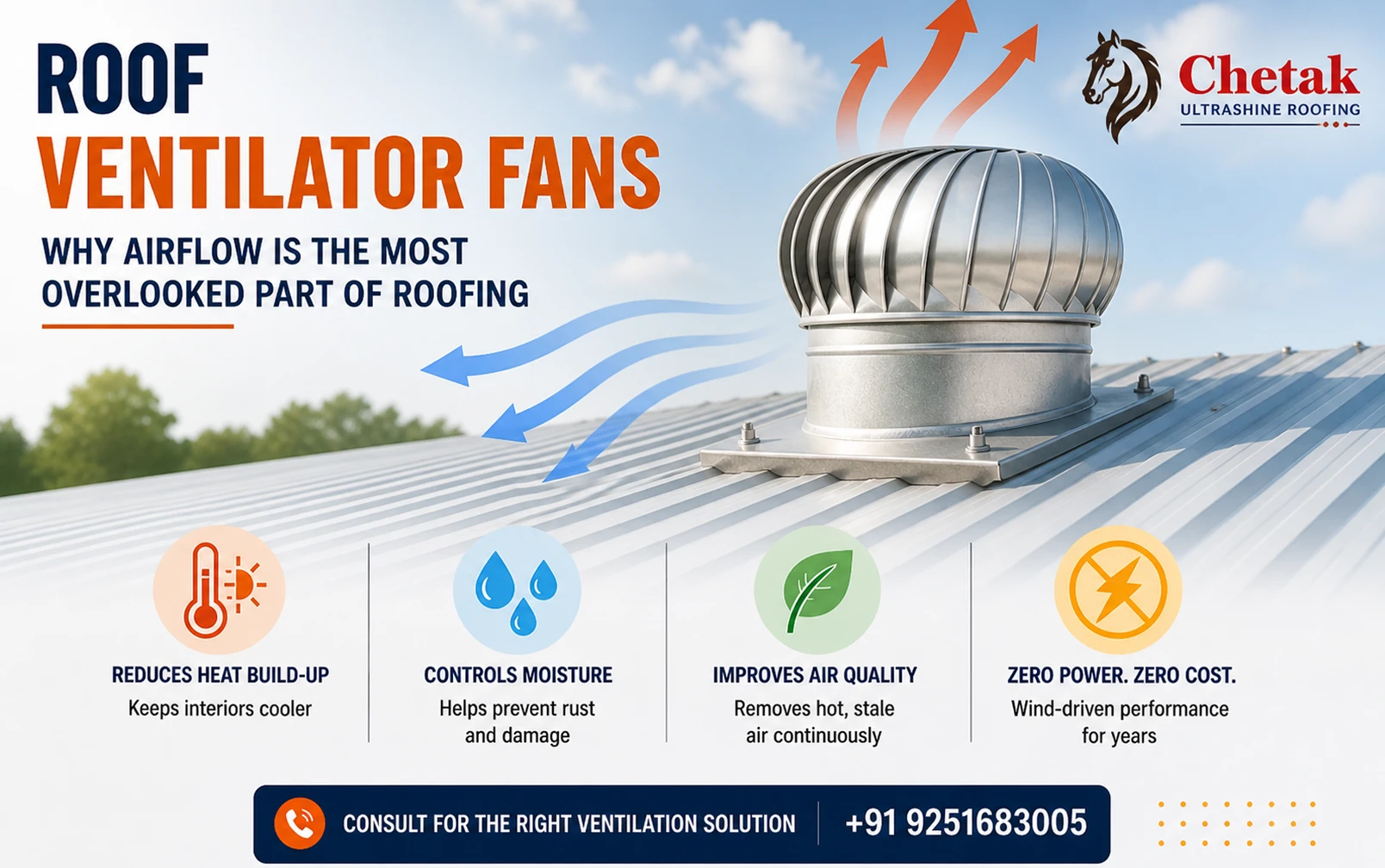
Roof ventilator fans, particularly wind-driven turbo ventilators, are designed to continuously remove hot and stale air from inside the building. These units are typically installed at or near the ridge — the highest point of the roof where hot air naturally accumulates.
As wind flows over the ventilator, it spins the turbine blades, creating a low-pressure zone inside. This pressure difference pulls hot air upward and expels it outside, maintaining continuous airflow without requiring electricity.
Because they operate using natural wind energy, these ventilators have zero operating cost and require minimal maintenance. Their simple design also ensures long-term durability, making them a reliable solution for a wide range of buildings.
Selecting the right number and size of ventilators is crucial for achieving effective airflow. Factors such as floor area, ceiling height, type of occupancy, and local wind conditions all play a role in determining the correct specification.
Under-sizing the ventilation system may result in minimal airflow improvement, while over-sizing can lead to unnecessary material costs. Proper planning ensures optimal performance without overspending.
High-quality ventilator systems are often paired with specially designed base plates that fit seamlessly with roofing profiles, ensuring proper installation and leak-proof performance. Working with experienced suppliers helps ensure that the system is correctly designed and installed.
Roof ventilation is not just an optional add-on — it is a critical component of a well-designed roofing system. Proper airflow improves indoor comfort, protects structural elements, and extends the lifespan of roofing materials.
By investing in ventilation during the initial construction phase, builders can avoid costly retrofits and long-term performance issues.
Roof ventilator fans provide a simple yet highly effective solution to heat and moisture problems in buildings. By enabling continuous airflow, they reduce indoor temperatures, prevent condensation, and protect the overall structure.