About Us
Lorem ipsum dolor sit amet, consectetur elit, sed do eiusmod tempor incididunt ut labore et magna aliqua.
Lorem ipsum dolor sit amet, consectetur elit, sed do eiusmod tempor incididunt ut labore et magna aliqua.
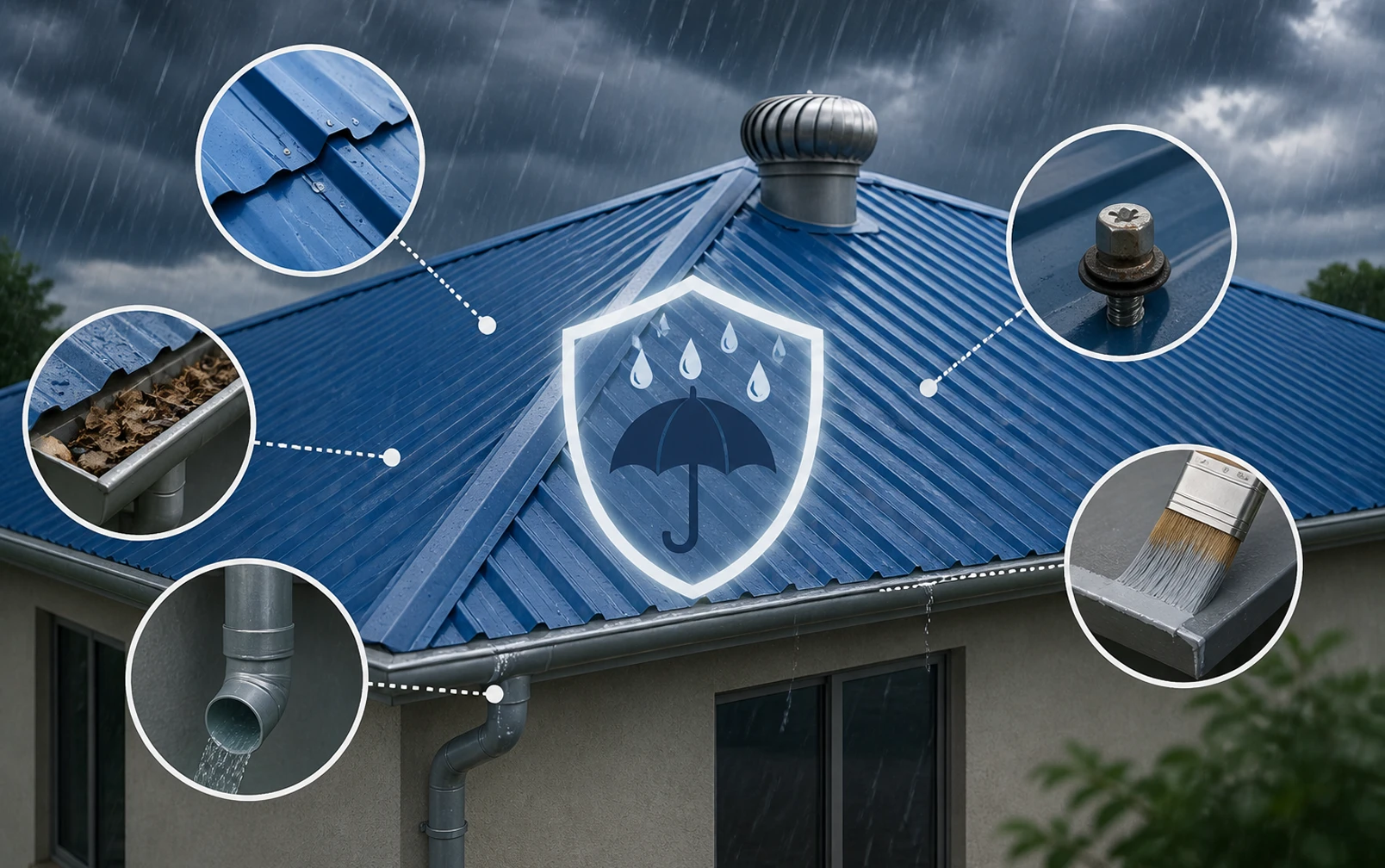
India’s monsoon season brings heavy and continuous rainfall that puts every roofing system to the test. Without proper preparation, even minor weaknesses in a roof can lead to leaks, water damage, and long-term structural issues.
With the right preventive measures and quality materials, your roof can withstand intense weather conditions and continue performing reliably. Here are five expert tips to help you prepare your roof for the monsoon season.
One of the most common causes of roof leakage is insufficient overlap between roofing sheets. During heavy rainfall, water can seep through improperly overlapped joints and enter the structure.
Before the monsoon begins, inspect all sheet-to-sheet overlaps and ensure they meet the recommended minimum, typically between 150 mm and 200 mm depending on the roof pitch.
Re-tighten any loose fasteners and apply self-adhesive sealing tape where gaps are visible. Proper sealing at joints is essential to prevent water ingress.
Gutters and downpipes play a crucial role in directing rainwater away from the roof. When they become blocked with debris such as leaves and dirt, water can accumulate and back up under the roofing sheets.
This can lead to insulation damage, internal leaks, and accelerated corrosion of structural components. Ensure all gutters are thoroughly cleaned and that downpipe outlets are free from obstruction.
For buildings with large roof areas, it is also important to verify that the drainage capacity is sufficient to handle heavy rainfall.
Fasteners are critical to the structural stability of the roof. Over time, exposure to moisture can cause screws and fixings to corrode, weakening their holding strength.
During strong winds and heavy rain, compromised fasteners may fail, leading to loose or lifted sheets. Inspect all fixings carefully and replace any rusted components with high-quality galvanised or stainless-steel alternatives.
This simple step can significantly improve the roof’s resistance to extreme weather conditions.
During installation, roofing sheets are often cut to fit specific dimensions. These cut edges are not protected by the original zinc coating, making them vulnerable to corrosion.
In humid monsoon conditions, untreated edges can quickly develop rust, which may spread over time and weaken the material.
Applying a zinc-rich cold galvanising paint to all exposed edges provides an additional protective layer and helps extend the lifespan of the sheets.
Preventive maintenance is important, but the foundation of a durable roof lies in the quality of materials used. Roofing sheets with proper zinc coating and manufacturing standards offer significantly better resistance to moisture and corrosion.
Using certified products ensures long-term performance and reduces the need for frequent repairs. Proper installation combined with quality material creates a roofing system that can handle seasonal challenges effectively.
Preparing your roof for the monsoon season is essential to avoid costly repairs and structural damage. By inspecting overlaps, clearing drainage systems, replacing weak fasteners, protecting cut edges, and choosing high-quality materials, you can significantly improve your roof’s performance.