About Us
Lorem ipsum dolor sit amet, consectetur elit, sed do eiusmod tempor incididunt ut labore et magna aliqua.
Lorem ipsum dolor sit amet, consectetur elit, sed do eiusmod tempor incididunt ut labore et magna aliqua.
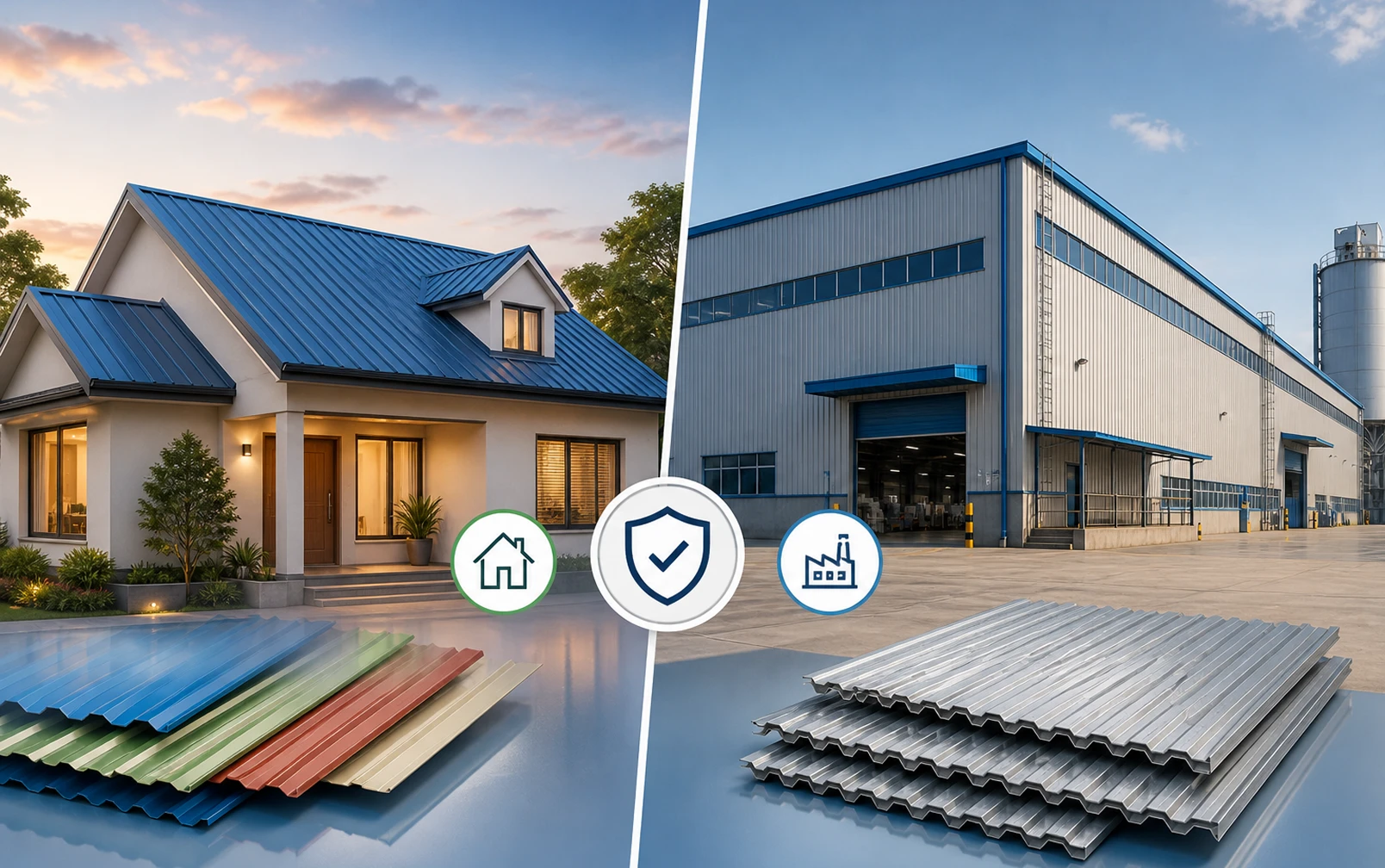
Steel has become the dominant roofing material across India due to its strength, durability, and versatility. However, not all steel roofing is the same. The grade, thickness, and coating weight must be carefully selected based on the type of project.
Choosing the wrong specification can lead to premature failure, unnecessary costs, or even structural risks. Understanding the difference between residential and industrial requirements is essential for making the right decision.
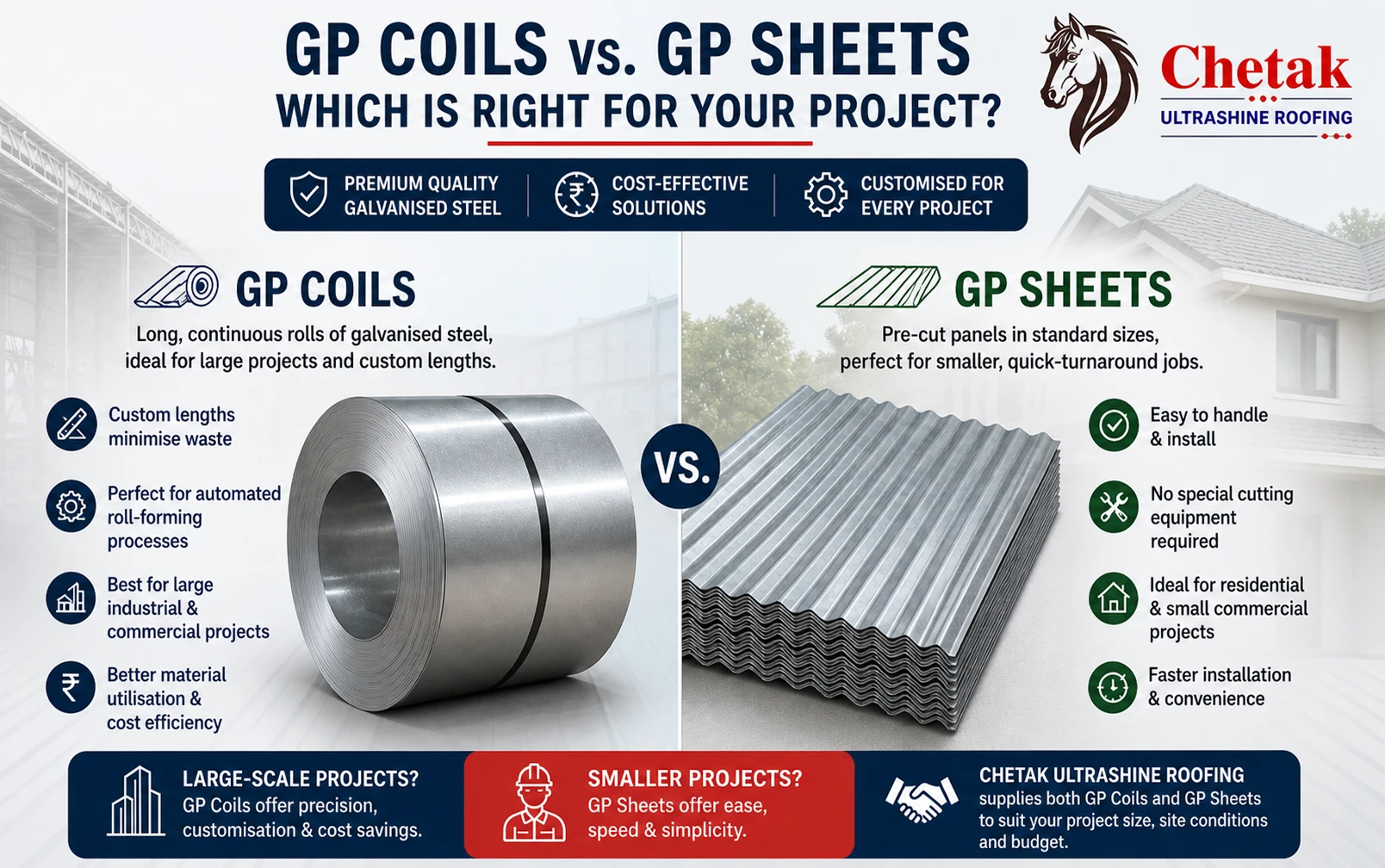
Residential and small commercial buildings typically do not experience extreme structural loads. For these applications, lighter gauge GP or PPGI sheets in the range of 0.40 mm to 0.50 mm are generally sufficient.
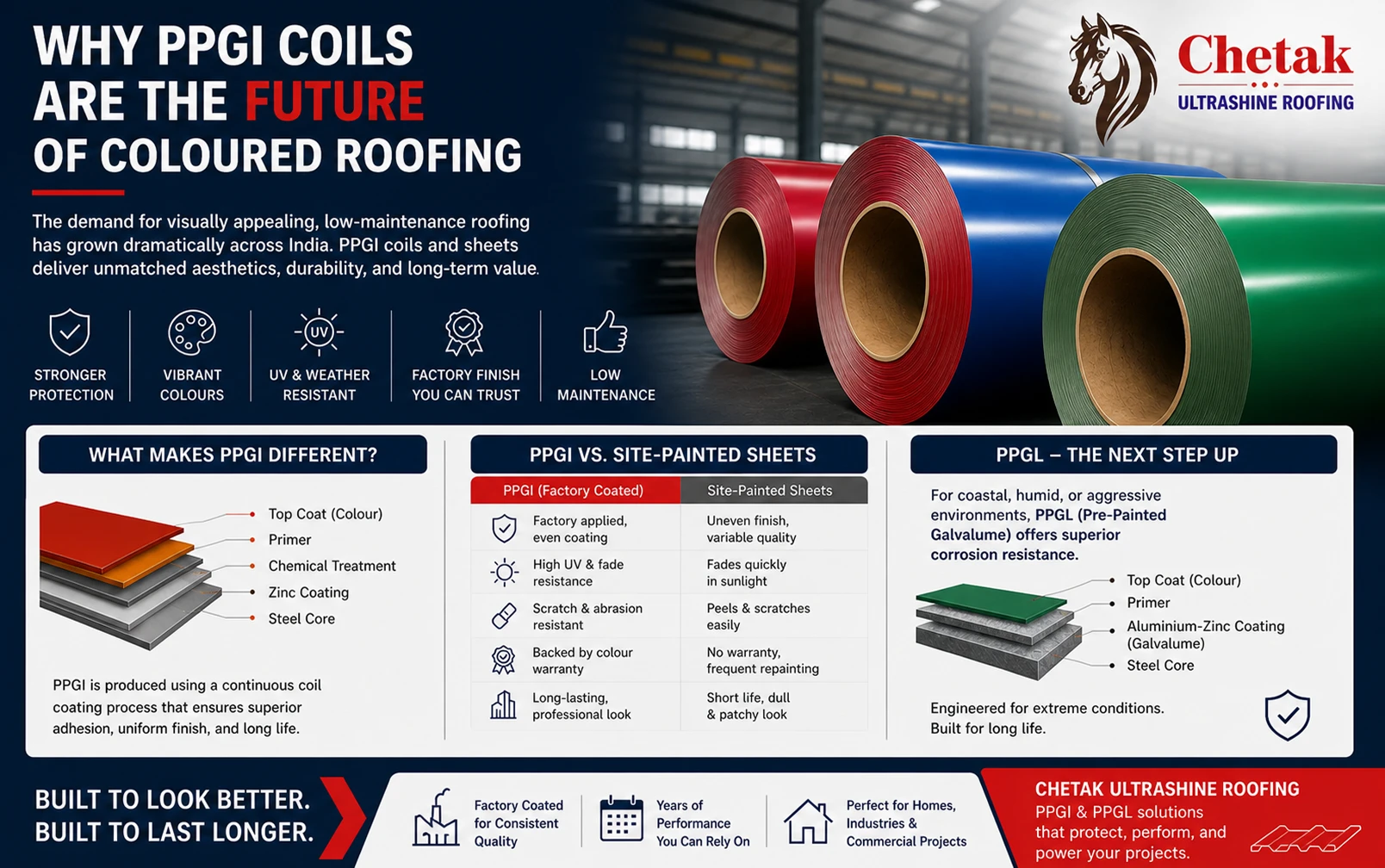
The primary focus in residential roofing is corrosion resistance, visual appeal, and ease of installation. PPGI sheets are widely preferred because they offer a clean, attractive finish along with factory-applied color coatings that come with warranties.
These sheets are lightweight, easy to handle, and ideal for quicker installations, making them a practical and cost-effective choice for homes and small structures.
Industrial and large commercial projects require significantly stronger roofing solutions. Warehouses, factories, and large-span structures are exposed to higher loads, wind uplift forces, and regular maintenance traffic.
For these applications, heavier gauge steel — typically between 0.50 mm and 0.80 mm — is required to ensure structural stability and long-term performance.
In more aggressive environments such as coastal regions, chemical plants, or food processing facilities, PPGL (Galvalume-based steel) is increasingly preferred. Its aluminium-zinc coating provides superior corrosion resistance, making it suitable for demanding conditions.
Beyond thickness, zinc coating weight is one of the most important indicators of steel quality. Measured in grams per square metre (GSM), it determines how well the material resists corrosion over time.
Higher GSM means more protective zinc coating, resulting in better durability and longer service life. For industrial roofing, a minimum of Z275 (275 GSM) is recommended to ensure adequate protection.
Residential projects in dry or less aggressive environments can safely use lower coating weights such as Z120 to Z180, balancing cost and performance effectively.
Using under-specified material in industrial settings can lead to structural issues, faster corrosion, and higher maintenance costs. On the other hand, over-specifying material for residential projects may unnecessarily increase the budget without adding meaningful benefits.
Proper specification ensures that the material performs as expected while optimizing cost and longevity.
To ensure you are getting the quality you are paying for, always request material test certificates from your supplier. These documents verify the actual thickness, coating weight, and mechanical properties of the steel.
Reliable suppliers provide full quality documentation, giving contractors and project owners confidence in the material’s performance and compliance with standards.
Choosing the right steel grade for roofing depends on understanding the specific needs of your project. Residential applications benefit from lighter, aesthetically pleasing materials, while industrial structures require heavier, more durable steel with higher corrosion resistance.